Boron (B)
It helps move sugars from cell to cell; control starch formation; stimulates cell division, flower formation and pollination.
PASTURE - HAY FIELDS - LAWNS: 20 lbs. per 1000 sq. ft. or 875 lbs. per acre. Apply spring and fall, and more lightly several times a season.
VEGETABLES: mix into the soil 6 - 8 lbs. per 100 sq. ft. or 60 - 80 lbs. per 1000 sq. ft. or 1 ton per acre. Apply topically 30 to 50 lbs. per 1000 sq. ft.; more lightly for short season vegetables or multiple applications.
TREES: 5 - 10 cups of fertilizer for each inch of trunk diameter.
SHRUBS: 5 lbs. per 100 sq. ft. or 50 lbs. per 1000 sq. ft. Scratch into the soil surface.
FLOWERS: 3 lbs. per 100 sq. ft. or 30 lbs. per 1000 sq. ft. Apply once or twice per season.
Purchasing fertilizers for your crops can be a tricky thing. There are so many fertilizers on the market today. One of the things we have noticed and am very surprised about is that the Organic Materials Review Institute (OMRI) and the National Organic Program (NOP) allow the use of GMO fertilizers in organic production. These types of fertilizers are most often made from soybeans that are not organic. This means that for every bag of GMO soy based fertilizer you purchase you are directly supporting Monsanto, a multinational corporation that has developed the Roundup ready soybean. To learn more about the Monsanto legacy on our planet and why you should not support them, you can go to the website:
Why Does Everyone Hate Monsanto?
What is in Harmony & Symphony fertilizer?
The Harmony & Symphony 5-4-3 fertilizer that we sell (Page 4) comes from a family owned and operated poultry farm in NY. The Symphony 5-4-3 is from USDA Organic Layers. Even though the Harmony fertilizer is not produced from the manure of organic chickens, we would consider it a far better product than most of the poultry based products sold as fertilizer on the market today. Harmony birds are layers, unlike other poultry manure based fertilizers, which are usually from broilers. Broilers are often fed feeds with arsenic in them, a common practice for large-scale mono-production of meat birds.
Another fact about our NY based poultry farm is that they raise organic layers for organic egg production and they produce a lot of their own organic grains for that operation. In general, we feel much better about purchasing, selling and using a product produced by farmers that have a clear understanding about raising crops and animals in an ecological and humane way.
It helps move sugars from cell to cell; control starch formation; stimulates cell division, flower formation and pollination.
Raw material for holding cell walls; raises pH; aids genetic stability; promotes root hair formation and earth; stiffens straw.
Needed for photosynthesis; stimulates root growth and aids water movement in plants.
Needed by Rhizobium for nitrogen fixation; helps form vitamin B12; improves growth, water movement and photosynthesis; improves growth, water movement and photosynthesis; improves boll production in cotton; activates certain enzymes.
Enzyme activator, particularly for certain protein forming enzymes and Vitamin A forming enzymes; it stimulated stem development and pigment formation.
Raw material for several enzymes including those that form chlorophyll and those that help oxidize (burn) sugar for energy; also necessary for legume nitrogen fixation.
Raw material for chlorophyll formation; activates enzymes particularly those involved with nitrogen reactions and energy metabolism; it increases oil production n flax and soybeans; helps regulate uptake of other elements.
Needed for nitrogen fixation and nitrogen use in the plant; specifically it is needed to make amino acids; it stimulates plant growth and vigor very much like nitrogen.
Raw material for proteins, chlorophyll, and genetic material (DNA and RNA); stimulates vegetative growth.
Raw material of genetic material (DNA and RNA) and for energy carrying compounds (ATP and ADP); stimulates fruit, seed and root production and early season growth; increases winter hardiness.
Necessary for sugar movement from leaves to developing fruits and seeds and for starch formation. It helps water movement; stimulates fruit, seed and root production and increases disease resistance; increases red pigment in fruits.
Increases the number of seeds (particularly in rice and other grains); increases sugar cane growth.
Necessary for proper carbohydrate production and use; increases resistance to drought; increases sugar content in some crops (sugar beets).
Raw material for certain amino acids and thus for proteins; necessary for legume nodule formation; raw material for certain oil compounds that give specific odors to some plants such as onions, garlic, mustard, etc; it is also a raw material for certain protein forming enzymes; it increases oil production in flax and soybeans.
Raw materials for several enzymes including those that form growth controlling substances; stimulates stem growth and flower bud formation.
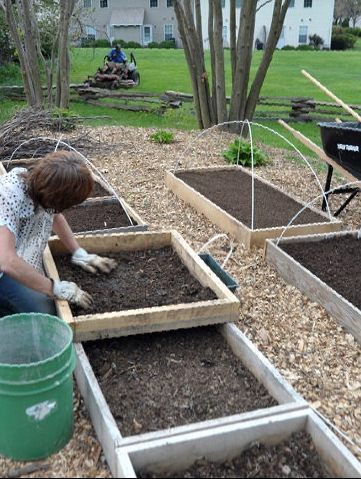
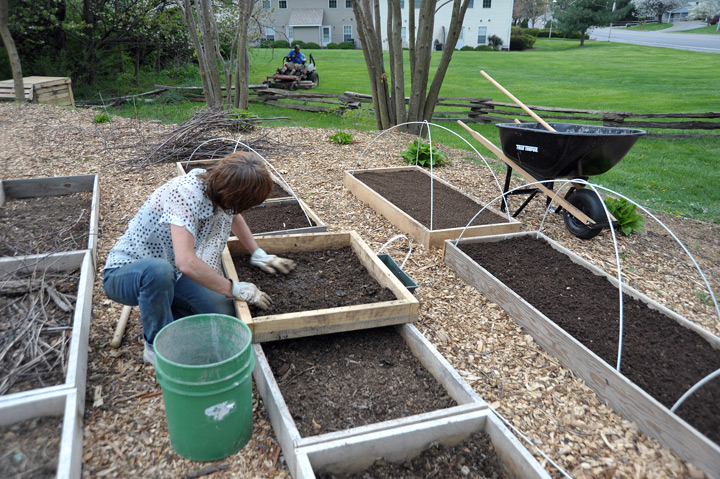
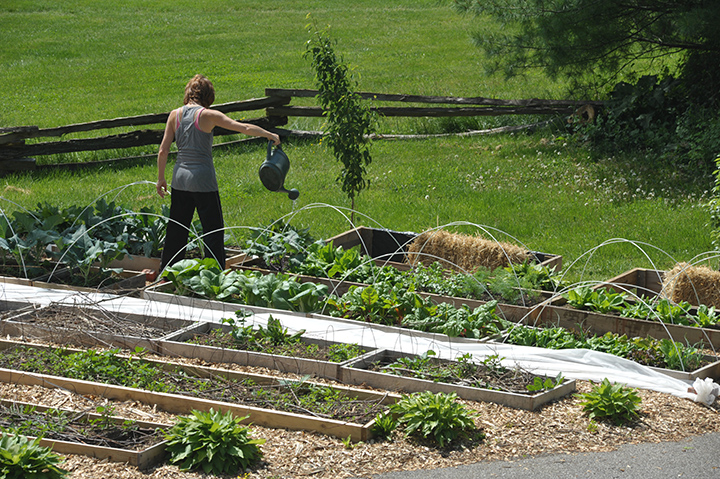
Build your Square foot beds. We recommend raised beds, above ground.
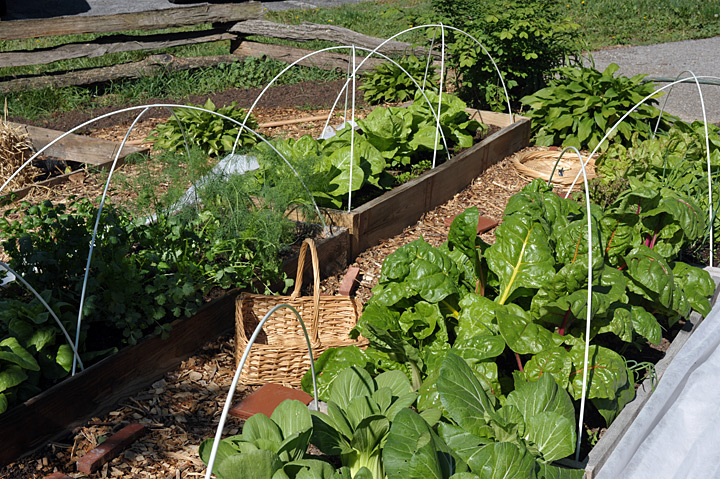
• The original square foot unit is 4x4 ft, 16 sq ft, which can supply one person with vegetables and salads. Many gardeners have found this square block unwieldy, and use 3x3 ft beds instead, which works well with good access all round. In our own garden we prefer the 2' width by whatever length we need. This allows for the easiest access and to be able to place row covers and their support rods at a more optimal height to encourage growth. We also allow two feet between the rows for wheel barrow access.
• Use untreated wood such as; Oak, Cedar, Locust, or Hemlock.
• Borate Treated lumber is an acceptable replacement for pressure treated lumber.
• Fasten boards together using deck screws. Pre-drill to prevent wood from splitting.
Conversions-
22 qt bag is equal to .735 cu ft.
1/20th cu yd bag is 1.35 cu. ft. or about 40.39 qts.
40 lb bag of compost is equal to 1 cu. ft.
1 Cup = 16 Tablespoons = 8 Ounces
Calculate your soil requirements.
• Multiply your width by length by depth to find your total cubic area. EX. 4' x 4' x 8” = 10.66 Cubic Feet.
• Once you have calculated your total volume follow the Seven Springs Farm Cubic Foot Recipe Mix to find how much of each material you will need.
Thoroughly blend all materials from the Cubic Foot mix recipe below and any other amendments you desire.
To make one Cubic Foot of mix, combine the following elements:
¼ Cubic Foot Course Vermiculite
¼ Cubic Foot of Coconut Coir (a sustainable alternative to peat moss)
½ Cubic Foot Organic Compost
With
3 Tablespoons Azomite Powder
Or
1 Tablespoon Kelp Meal
Or
you can use half the amounts
of each kelp an azomite if you want.
And
¼ Cup Symphony Organic Chicken Manure 5-4-3 Fertilizer
½ Cup Black Castings (Worm-castings)
1 Cup = 16 Tablespoons = 8 Ounces